What I learned from 200 venue operators in two days
Actionable takeaways on revenue, operations, and tech from conversations across the industry

Wayne Fernandez
Founder
It’s not often that I get to spend time with other event venue operators and exchange thoughts on the present and future of our industry. We work, mostly, in isolation: each in our own venue, managing our own spaces, clients, and events. And yet, being able to collaborate and trade notes with industry peers is an invaluable learning experience. Yes, we can brainstorm and problem-solve with ChatGPT, but — call me old school — nothing replaces real dialogue.
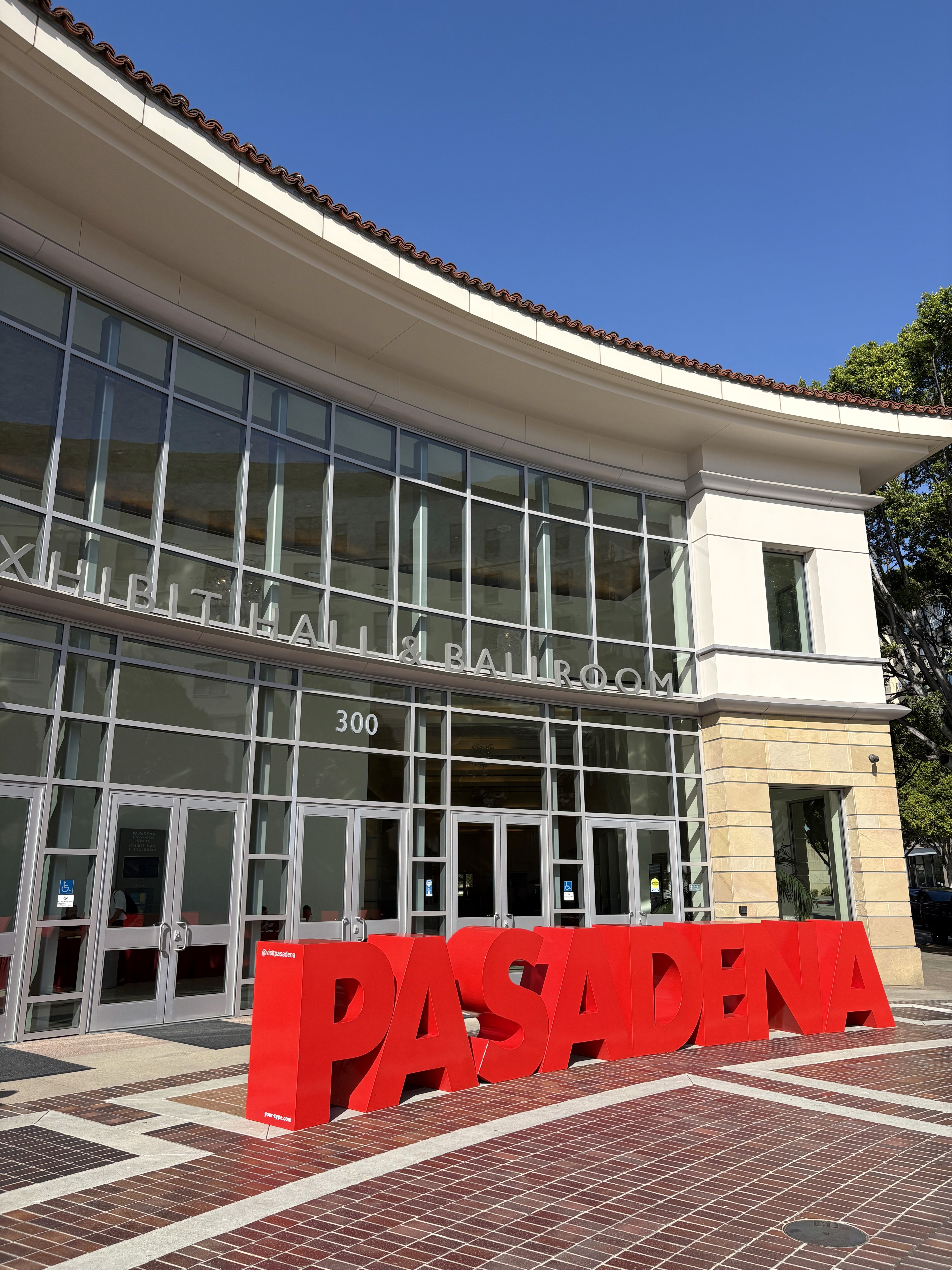
This was reaffirmed to me this week, when I attended the International Association of Venue Managers Region 7 Conference in my backyard of Pasadena, CA. The event convened over 200 venue operators from across the southwestern U.S: I met a manager from a historic theatre in Oakland, event coordinators from universities like Stanford and USC, and leadership from several convention centers, among many others. Our conversations were both broad — covering everything from security staffing to venue marketing — and deep.
It was also an opportunity for me to debut ShoSoft, the all-in-one event management software born out of my three decades as an event operator. We demoed the product and received great feedback; many users said it was intuitive and simple, two adjectives not often associated with software in our industry, which is largely legacy and clunky.
After a day of reflection, I’m thinking about everything I learned at the conference. Here are some of my takeaways, which I hope will be useful to other event professionals, too:
Everyone is feeling the impacts of current economic turbulence: A presentation by Dr. Raymond Sfeir, economics professor at Chapman University, on the current economic climate underscored what we’ve all been feeling: when the economy is uncertain, the first thing brands and consumers cut back on is event and live experience spending. This is something I’ve felt at my event venue, and it was nice to know I’m not the only one.
The Rose Parade is impressive from the outside, and even more impressive from the inside: Mandy Denaux from the Pasadena Tournament of Roses delivered a presentation detailing how the city orchestrates the annual parade that draws nearly one million viewers in person, and over 70 million virtually around the world. Their operation is powered by volunteers — many of whom work the parade for 30+ years — emphasizing how building a strong culture and brand around an event is critical for its longevity.
Venue operators want AI that is practical, not “pie in the sky”: Nowadays, it’s impossible to have a discussion without the mention of AI. But, notably, I heard a lot of exhaustion over constant AI chatter; event people don’t want to learn complex tools, or use AI just for the sake of it. Their priority is to make their jobs easier, and only want AI if it will do that for them.
Large (public) venues differ greatly from smaller, privately-owned ones: Through discussions with people who work at large venues — such as convention centers or athletic stadiums — I learned that their needs and those of people like myself — who manage smaller, privately-owned venues — are quite different. Because we have more skin in the game when it comes to our finances, operators like myself are more driven to maximize revenue than operators of larger, public venues. However, we are similar in that we are equally concerned with streamlining operations and increasing efficiency.
I left the IAVM Region 7 Conference inspired, energized, and motivated — both as a venue owner, and as the founder of ShoSoft, a platform I fundamentally believe has the potential to help my peers run more productive, thriving event businesses. Two days on ChatGPT could never.
Founder
Share