
Every venue has slow months. For most independent operators in North America, the dead zone runs from mid-January through mid-March, plus a softer dip in late July and August. The calendar is predictable enough that you can almost set your watch by it, which is exactly why so many operators stop trying.
The default move is to ride it out: cut hours, trim staff, hope the spring inquiries arrive on time. That choice can quietly cost a mid-size venue $60,000 to $200,000 a year in revenue that was sitting there for the taking. The slow season is a margin opportunity hiding inside a fixed-cost base you are already paying for.
Why Is Slow Season A Margin Opportunity For Event Venues?
Slow months are a margin opportunity because every incremental booking lands on a fixed-cost base your peak season already covered, so it converts at a much higher contribution margin than the same booking in a busy month. Your rent, your insurance, your core staff salaries, your loan payment on the buildout: those run whether you book one event a week or six. In slow months, the same fixed costs land on fewer events, and the margin math gets ugly fast.
The leverage point is that every incremental booking in a slow month operates at much higher contribution margin than a booking in a peak month, because the fixed costs are already covered by your peak season. A weekday corporate booking at 60 percent of your usual rate is a high-margin sale on inventory that would otherwise have generated zero.
Operators who internalize this stop comparing slow-season rates to peak-season rates and start comparing slow-season revenue to zero. The decisions that follow get a lot easier.
Five Revenue Moves For Off-Peak Months
1. Corporate Training And Recurring Weekday Clients
Corporate training, board offsites, all-hands meetings, and quarterly planning sessions run on a calendar that is essentially counter-cyclical to weddings and galas. February and August are heavy training months for many companies, precisely because their own slow seasons line up with yours.
The pitch writes itself: a blank Tuesday in February for 40 people, A/V included, catered lunch from a partner, billed to a single PO. Most independent venues never pursue this market because the inquiries don’t come in unsolicited. The fix is to build a one-page weekday corporate rate sheet, send it to ten local HR and learning-and-development contacts, and follow up quarterly. Three recurring corporate clients at one booking each per quarter is $40,000 to $90,000 a year in compounding revenue.
2. Photo And Film Production Rentals
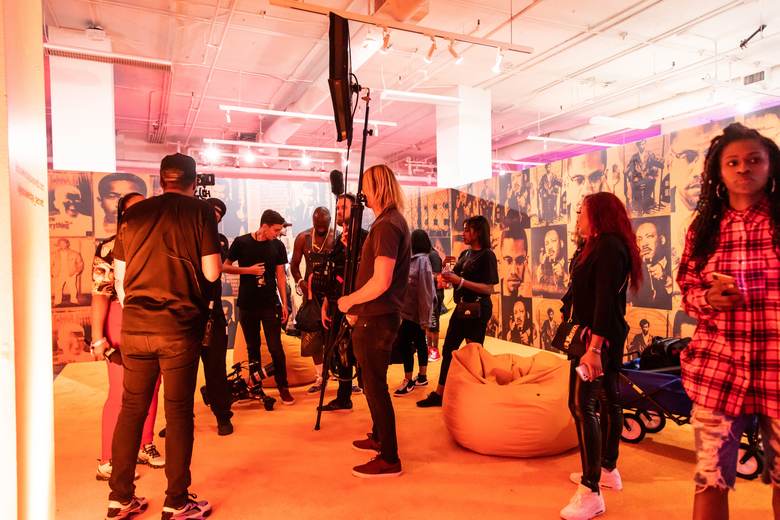
Production companies, photographers, and content studios need interesting spaces on weekdays, often with short notice. A venue that would otherwise sit empty on a Wednesday is a near-perfect match for a one-day commercial shoot, a lookbook, or a podcast taping.
Day rates for production rentals typically run $1,500 to $5,000 depending on the market and whether you provide power, internet, and a small crew. The administrative load is light: a simpler contract, a certificate of insurance, and a single point of contact for the day. Listing the venue on two or three production location databases takes a couple of hours and tends to generate steady inquiries within a quarter.
3. Self-Produced Events
A self-produced event is one your venue runs, markets, and sells tickets to directly. You keep the ticket revenue, the bar margin, and the food margin instead of charging a flat fee, so a well-run event in a slow month can outperform a rented booking on the same date.
Formats that work in off-peak weeks: a curated speaker series with a local partner, a quarterly comedy night, a winter pop-up market, a Sunday brunch concert. The first one or two events are usually break-even, and that is fine. The point is to build a list and a reputation for being open in the months everyone else is closed. By the third or fourth installment, most operators are clearing $5,000 to $15,000 per event in contribution margin.
4. Vendor And Partner Activations
Your preferred caterers, florists, photographers, A/V partners, and rental companies have their own slow seasons and their own customer lists. A joint activation, a tasting evening, a styled shoot day, or a planner open house costs almost nothing to host and gives every partner a reason to drive their audience to your venue.
The revenue is rarely direct. The return shows up in the inquiry pipeline for the following peak season, which is exactly when you want it. Operators who run two or three partner activations a year tend to see 15 to 30 percent higher inquiry volume in the quarter that follows.
5. Dynamic Pricing
Most independent venues run a single rate card that does not change with the calendar. A more disciplined approach treats slow-month dates as a separate inventory tier, with rates set to clear the inventory rather than protect a headline price.
A practical version: a 15 to 25 percent slow-month rate adjustment for weekday bookings, a 10 percent adjustment for Sunday bookings in the slow months, and a published last-minute rate for any date inside a 21-day window that is still unbooked. The goal here is not to slash prices, but to give serious clients a clear reason to book the dates you actually want filled. Venues running dynamic pricing on a venue management platform like ShoSoft can set the rules once and let the calendar do the enforcement, which avoids the awkward conversation of quoting a different number to two different inquiries on the same week.
Marketing The Slow Season Differently
The audience you market to in February is not the audience you market to in June. Couples planning weddings are largely off the market in the slow months. Corporate buyers, production companies, association planners, and your past clients are very much on the market, and they respond to different messages.
Three tactical shifts worth making:
- Segment your email list by buyer type and send slow-season offers only to the segments that buy in slow seasons. A wedding lead does not need a corporate weekday rate sheet.
- Refresh your Google Business Profile and your website hero image for the season. A venue dressed for a corporate training day photographs differently than the same room set for a 200-person wedding, and the photos quietly signal who you serve.
- Run a small paid search budget on terms like “corporate event space [city]” and “production location rental [city]” through the slow months. Cost per click is low because the wedding searches dominate ad auctions in peak months and back off in slow ones.
Planning A Year Ahead
Slow-season revenue does not appear because you decided in January to chase it. It appears because the corporate contacts were warmed up in October, the production listings went live in September, and the dynamic pricing rules were written into the system before the calendar opened.
A simple annual rhythm: in Q3, identify the ten slow weeks coming up and assign a revenue target to each. In Q4, build the contact list and marketing assets for those weeks. In Q1, execute against the plan. By year two, most of the moves above are running on autopilot.
Closing Thought
The venues that compound revenue year over year are the ones that quietly stopped accepting a quarter of empty calendar as the cost of doing business.