A client books your room for a conference and asks for "a couple of mics." That request can mean two handhelds on a lectern, a lavalier for a pacing keynote speaker, or six microphones for a panel with audience questions. Getting it wrong shows up on the day as feedback squeals, a speaker nobody can hear or a scramble to rewire the stage.
Most of these problems come from choosing the microphone type before anyone has asked how the speaker will actually move and talk. A few questions at booking settle it.
Lavalier vs Handheld Microphone, Which Is Better for Events?
A handheld microphone gives the clearest, loudest sound with the least feedback risk, because it sits close to the speaker's mouth. A lavalier clips to clothing and frees the speaker's hands, but it sits farther from the mouth, picks up more of the room and feeds back sooner. For most events, use handhelds for toasts, panels and audience questions, and use a lavalier or headset for presenters who move, gesture or use a clicker.
How Each Microphone Type Works
Handheld
A handheld is held a few inches from the mouth, either wired or wireless. Because the voice is close and strong, the sound engineer needs less gain, which leaves more headroom before feedback. Handhelds are also easy to pass from person to person, so they suit open discussion and audience questions.
Lavalier
A lavalier (or lapel mic) is a small microphone clipped to a shirt, tie or jacket, wired to a bodypack transmitter worn on a belt or in a pocket. It frees the speaker's hands and looks unobtrusive on camera. The tradeoff is distance, since the mic sits on the chest, and the sound changes every time the speaker turns their head.
Headset
A headset or earset mic hooks over the ear and places a small capsule near the corner of the mouth. It combines the freedom of a lavalier with sound much closer to a handheld. Fitness instructors, keynote speakers who roam the stage and performers rely on them.
Comparing Sound, Movement, Feedback and Setup
Each type wins on a different measure, so it helps to compare them directly.
- Sound and volume favor the handheld and the headset
- Freedom of movement favors the headset and the lavalier
- Feedback resistance favors the handheld, with the lavalier weakest
- Fast changeovers favor the handheld, which needs no fitting
- A discreet look on stage and camera favors the lavalier
Setup time is the cost of hands-free sound. A lavalier needs a technician or a well-briefed stage manager to fit the transmitter, route the cable under clothing and test for rustle against fabric or jewelry. A headset needs a proper fit and sometimes tape. A handheld needs fresh batteries and a quick sound check.
Which Microphone to Use for Each Event Format
Match the microphone to how the person speaks and moves, and to who will run the sound.
Keynotes and presentations
A presenter who walks the stage and uses slides is best served by a headset, or a lavalier if the room is quiet and the sound system is tuned. A presenter who stays at the lectern can use the lectern microphone with a handheld as backup.
Panels and interviews
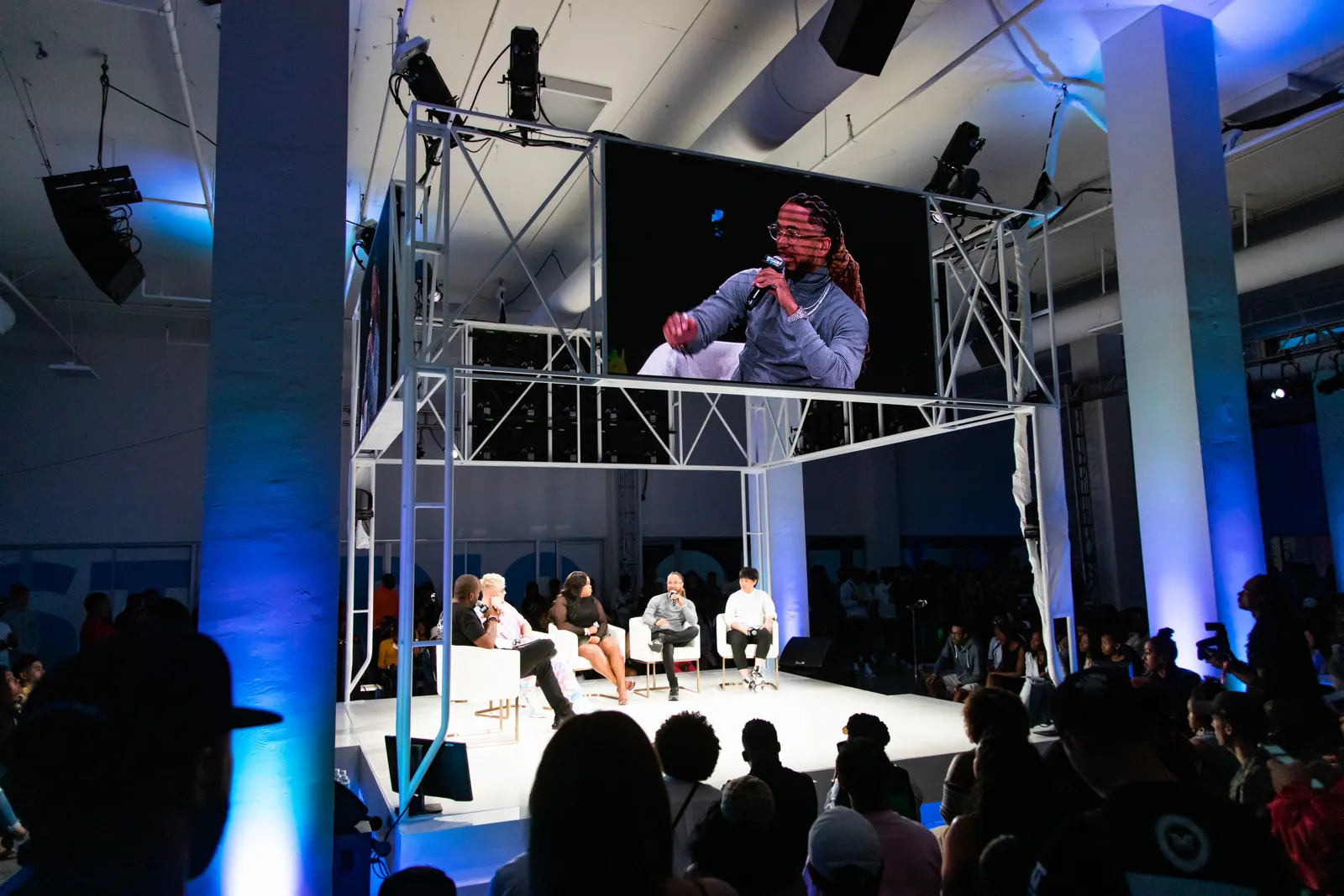
Give each panelist a handheld, or a lavalier each if the event is filmed and a technician is mixing. Too few microphones shared along a table cause long pauses while they are passed.
Toasts, awards and weddings
Use handhelds. Speakers giving a toast hold a glass in one hand and a microphone in the other comfortably, and nobody has time to fit a lavalier between courses.
Audience questions
Use one or two handhelds carried by runners, or a handheld on a stand in the aisle. Ask the runner to keep hold of the microphone so the guest does not pull it away from their mouth.
Setting Up for Reliable Wireless Sound
Wireless microphones fail in predictable ways. Batteries run low, frequencies clash with another system and transmitters get switched off by accident.
Start every event with fresh or fully charged batteries and a labelled spare for each transmitter. Scan for clear frequencies before doors, especially in buildings with neighbors who also run wireless systems. Wireless microphone rules differ by country and have changed in some places, so confirm that your receivers operate on permitted frequencies. Label each microphone and its receiver channel so a technician can find the right fader quickly.
Ask clients at booking how many speakers they have, how they will move and whether the event is being recorded. Those three answers decide the microphone list.
Build a Microphone Checklist Into Every AV Order
List how many handhelds, lavaliers and headsets you own, which receivers they pair with and who is trained to fit them. Add microphone questions to the AV section of your booking form, and confirm the final list at the pre-event walkthrough. The right microphone chosen early prevents most sound complaints.
Frequently Asked Questions
Why do lavalier mics cause more feedback than handhelds?
A lavalier sits farther from the mouth, so the sound engineer must raise the gain to make the voice loud enough. More gain means the microphone also picks up more sound from the speakers in the room, which loops back as feedback. Careful speaker placement and equalization help, but a handheld or headset is safer in a loud or reflective room.
Can a speaker share a handheld mic with a lavalier?
Yes, and it is common for a presenter to wear a lavalier and pick up a handheld for a demonstration or a question. Each microphone needs its own channel on the mixer. The technician should mute whichever one is not in use to avoid a hollow, doubled sound.
Are headset microphones better than lavaliers?
For volume and feedback resistance, usually yes, since the capsule sits near the mouth. Lavaliers look less noticeable and suit filmed interviews and formal settings. Many venues keep both and choose based on the speaker and the room.
How many wireless microphones does a venue need?
That depends on the events you host. Many venues that run meetings and social events keep at least two handhelds and one or two lavaliers or headsets, plus spares. Track how often clients ask for more than you own, and rent extras for those events until owning them makes sense.