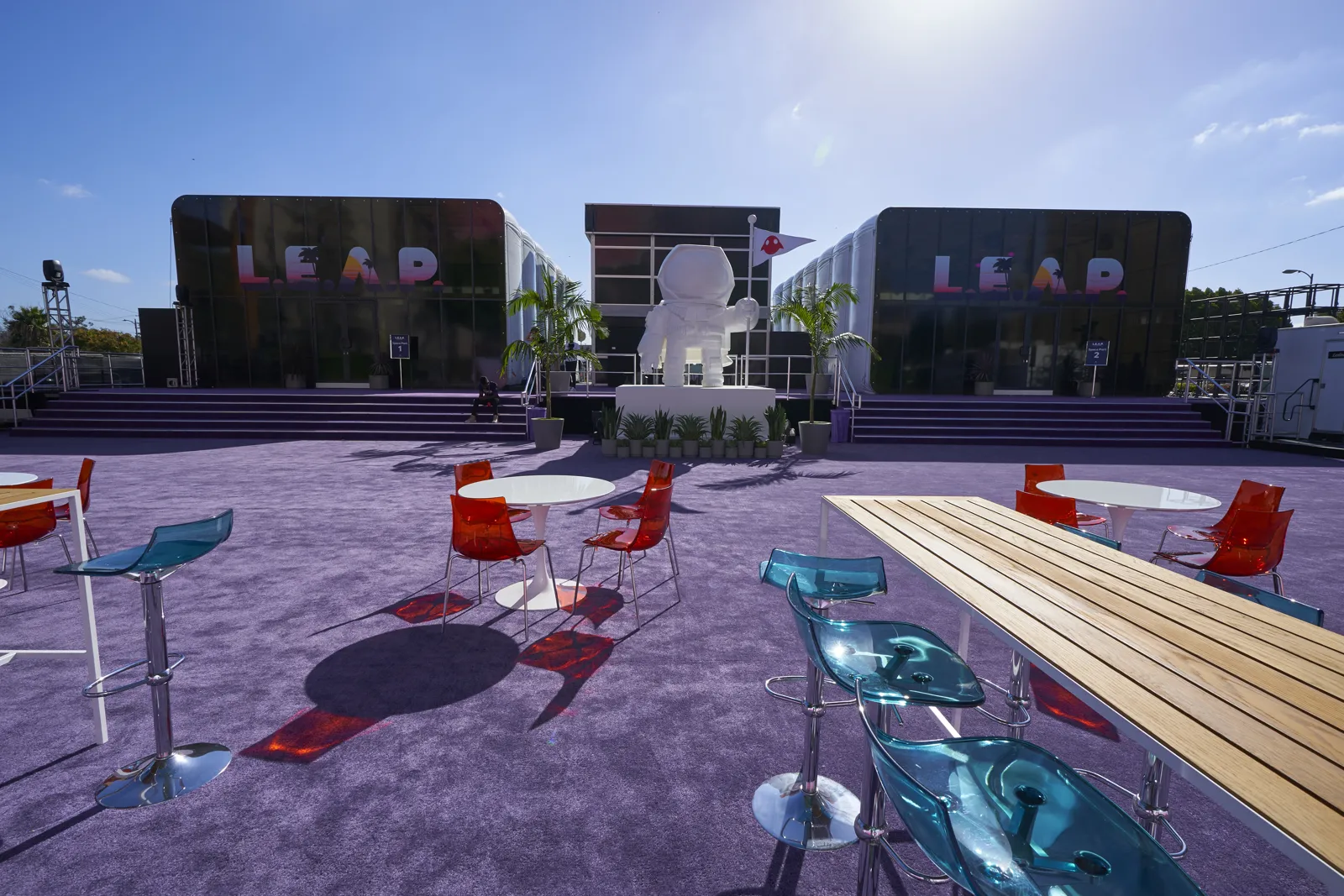
An outdoor reception in late fall can feel perfect at 5 pm and miserable by 8. Guests pull their coats tight, crowd around the one heater by the bar and leave early, and the client remembers the cold more than the view.
Patio heaters solve that when there are enough of them, placed well and run safely. This reference covers how to size heating for an outdoor event, where heaters can and cannot go and how to handle propane.
How Many Patio Heaters Does an Outdoor Event Need?
To work out how many patio heaters an outdoor event needs, measure the area guests will occupy, check the heating area listed for the heater model and divide one by the other, then add more for wind, open edges and colder nights. A common freestanding propane heater rated around 40,000 BTU is often listed as warming a circle roughly 15 to 20 feet across, so a 2,400 square foot patio may need around ten units.
Always size from the manufacturer's stated coverage for the units you use. Ratings and real performance vary by model, height and conditions.
Choose the Heater Type
Three types cover most outdoor events.
- Freestanding propane heaters, portable and common for rentals
- Natural gas heaters, fixed in place with a permanent gas line
- Electric infrared heaters, mounted or on stands, with no open flame
Propane units are flexible and need no power, which makes them the default for rented heat. Natural gas suits permanent patios where heaters stay year round. Electric infrared heaters warm people and surfaces directly, work well under covered areas where flame heaters are not allowed and need adequate electrical capacity.
Size the Heating by Area
Start with the space guests will use. A dinner seating area, a cocktail zone and a bar line each need heat, while walkways and planted edges may not.
Consider a seated dinner on a 40 by 60 foot patio, or 2,400 square feet. If a heater warms a circle about 18 feet across, it covers roughly 250 square feet. Dividing 2,400 by 250 gives about ten heaters. On a windy night or an exposed rooftop, add 20 to 30 percent, since wind carries heat away fast.
Heaters warm a zone more evenly when they are spaced in a grid with overlapping circles. One large cluster in the middle leaves the edges cold.
Placement and Clearance Rules
Each heater has minimum clearances to anything that can burn, set by its manufacturer. Find them in the manual and follow them, since they differ by model.
- Clearance above and around the unit per the manual
- Away from umbrellas, awnings, drape, trees and decor
- Never inside tents or covered areas unless the unit is rated for it
- Outside main walkways, exits and service paths
- Anchored or ballasted against tipping in wind
Flame heaters belong outdoors in open air. Using them indoors or in enclosed tents creates carbon monoxide and fire risk. Your local fire marshal may have additional rules for heaters near tents, stages or exits, so check before a large event.
Propane Handling Basics
Propane is safe when handled with consistent habits. Set them in your policy and train every staff member who touches a cylinder.
- Store cylinders outdoors, upright and away from exits and drains
- Never bring cylinders indoors, even empty ones
- Leak check connections with soapy water before lighting
- Limit spare cylinders on site to what the event needs
- Keep a fire extinguisher near the heater zone
Many fire codes limit how much propane can be stored and where, and some jurisdictions require a permit for propane at events. Rules vary by city and county, so confirm with your fire marshal and your propane or rental supplier.
Consider ten heaters running for a five hour event. If a 20 pound cylinder lasts about ten hours on high, one full cylinder per heater covers the night, and two or three spares stored safely cover a cylinder that runs out early or a heater that was not filled.
Staffing and Guest Safety on the Night
Name one staff member to light, adjust and shut down the heaters. Guests should never adjust or move a heater themselves, and children should be kept away from the units.
Check that every heater's tip-over switch works before guests arrive. During the event, walk the heater zone regularly to watch for anything blown against a unit, such as a napkin, a table runner or a coat. At the end of the night, shut the heaters down, let them cool and store cylinders before staff leave.
Light the heaters 20 to 30 minutes before guests arrive, so the furniture and paving have time to warm. Turning them on as the first guests walk outside leaves the opening half hour cold.
Build a Heater Plan for Your Patio
Measure your outdoor spaces this week and write down the guest area for each standard layout. Note the coverage of the heaters you own or rent, work out how many each layout needs and add a wind allowance for exposed spaces.
Put the count, the placement map and the propane rules on one page, and send it to every client booking an outdoor event between fall and spring.
Frequently Asked Questions
How much area does a patio heater cover?
It depends on the model and conditions. Many freestanding propane heaters rated around 40,000 BTU list a heating circle roughly 15 to 20 feet across. Wind, height and open surroundings reduce real coverage, so check the manufacturer's rating and test on a cold night.
Can you use patio heaters under a tent?
Only heaters rated for that use, with the clearances and ventilation the manufacturer and your fire marshal require. Standard propane mushroom heaters are generally not meant for enclosed or covered spaces. Many tent events use heaters designed for tents or electric infrared heaters instead.
Are propane patio heaters safe for events?
They can be, when they are placed with the right clearances, anchored against wind and run by trained staff. Store cylinders outdoors and upright, leak check every connection and keep an extinguisher nearby. Check local fire rules on propane at events.
How long does a propane tank last in a patio heater?
It varies by tank size and heat setting. A standard 20 pound cylinder holds roughly enough propane to run a 40,000 BTU heater for about ten hours on its highest setting, and longer on lower settings. Plan spare cylinders for long events and check the manufacturer's figure for your model.