
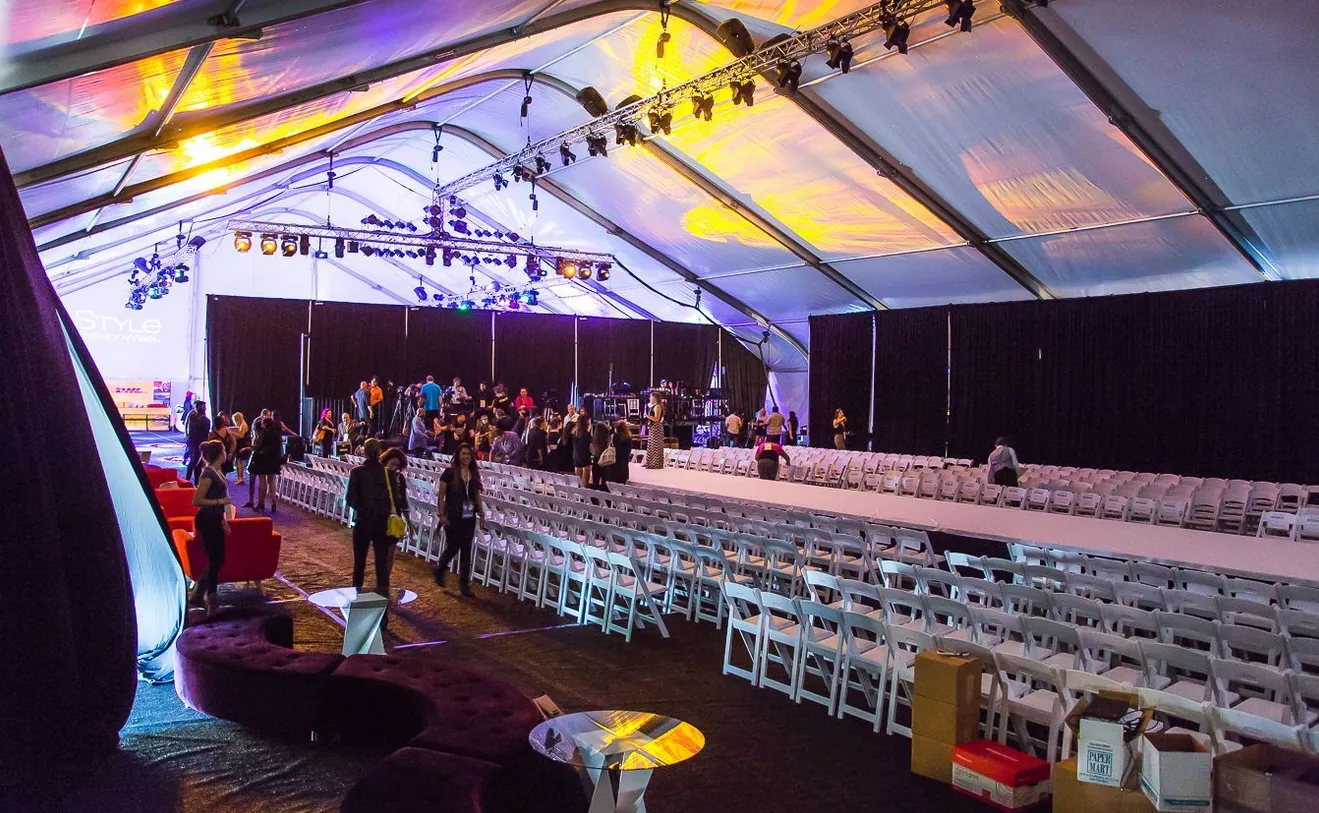
A client books your indoor room for 150 guests, then asks whether they can put cocktail hour on the lawn under a tent. Within a week you are fielding questions about tent sizes, heaters, permits and who pays for the flooring.
A working knowledge of tent rental lets you quote realistic timelines, protect your grounds and keep the event inside the rules your fire marshal enforces.
What Should Venues Know About Event Tent Rental?
Event tent rental covers the tent itself plus everything that makes it usable, such as sidewalls, flooring, lighting, heating or cooling, anchoring and installation labor. The right size depends on the guest count and the layout inside, and most jurisdictions require a permit and sometimes an inspection once a tent passes a set size. The venue's job is to approve the site, the anchoring method and the install schedule, and to make sure the rental company handles permits.
Types of Event Tents
Rental companies offer four broad styles, and each suits different ground and budgets.
- Pole tents, held up by center and perimeter poles and staked into soft ground
- Frame tents, held up by a metal frame with no center poles, staked or weighted with ballast
- Clearspan or structure tents, rigid aluminum frames that span wide areas with no interior poles
- Sailcloth tents, peaked pole tents in translucent fabric, popular for weddings
Pole tents need stakes, so they only work on lawns or soil. Frame and structure tents can go on pavement or decks with water barrels or concrete blocks as ballast.
How to Size a Tent per Guest
Size the tent from the layout, then add space for everything that is not a guest. Rental companies use rules of thumb similar to the ones for indoor rooms.
- Standing cocktail reception, about 6 to 10 square feet per guest
- Theater seating in rows, about 6 to 8 square feet per guest
- Seated dinner at round tables, about 12 to 15 square feet per guest
- Classroom seating at tables, about 15 to 20 square feet per guest
Then add the extras. A dance floor, a bar, a buffet line, a stage or DJ booth and a catering prep area each take real space. Leave clear aisles to every exit.
Consider a seated dinner for 150 guests. At about 12.5 square feet each, the tables take roughly 1,875 square feet. Add a 16 by 16 foot dance floor at 256 square feet, a bar at about 100, a buffet at about 150 and a DJ at about 100, and the total comes to about 2,480 square feet. A 40 by 60 foot tent gives 2,400 square feet, which is tight, so a 40 by 80 at 3,200 square feet is the comfortable choice and leaves room for the aisles.
Permits and Inspections
Many local fire codes require a permit for a temporary tent once it exceeds a certain size, and the threshold, the fees and the lead time vary by city and county. Some jurisdictions also inspect the tent after installation and before guests enter. Ask your local fire marshal or building department what applies at your address, and keep their answer on file for the next client.
Inspectors commonly look at a few things.
- A flame-resistance certificate for the tent fabric
- Exit width, exit signs and clear paths to each exit
- Fire extinguishers and no-smoking signs
- Distance from buildings, heaters, generators and cooking equipment
Before any stakes go in, the ground has to be checked for buried utilities. In the United States that means calling 811 a few business days ahead so utility lines are marked.
Heating, Cooling and Weather
Tents hold heat poorly. For cool evenings, rental companies supply heaters, and many jurisdictions restrict open-flame or fuel-fired heaters inside a tent, so indirect-fired heaters that sit outside and duct warm air in are common. Fuel tanks and generators belong outside the tent at the distance your fire authority requires.
Wind matters most. Every rental tent is engineered for a certain wind load, and the rental company should tell you the wind speed at which the tent must be cleared. Put that number into the event's rain and weather plan, with a named person who makes the call and an indoor space the group can move to.
What Drives the Cost of a Tent Rental
Prices vary widely by region, season and supplier, so ask local companies for itemized quotes. The total usually depends on these line items.
- Tent type and size, with frame and structure tents generally costing more than pole tents of the same area
- Sidewalls, doors and windows
- Flooring or subflooring, which can rival the tent itself on uneven ground
- Lighting, power, generators and heating or cooling
- Delivery, installation and removal labor, plus any site visit and permit fees
Timing changes the price too, since weekend install and removal labor can cost more. Peak wedding and holiday seasons book up early, so tell clients to reserve tents as soon as the date is set.
Protecting the Venue During the Rental
The venue usually does not pay for the tent, but it carries the consequences of a bad install. Ask for the tent company's certificate of insurance naming your venue, a site plan showing the tent footprint and anchoring, and a schedule for install and removal.
Block the install and teardown days on your calendar as part of the event so no one sells the lawn for a Friday ceremony while the tent crew is working. Photograph the grounds before and after so any damage is easy to attribute.
Build Your Tent Fact Sheet
Write a one-page outdoor fact sheet with the dimensions of each tentable area, ground type, the anchoring allowed, power available, the nearest water and restrooms, and the tent companies that have worked on your site. Send it to every client who asks about a tent, and you will save each of them a week of back-and-forth.
Frequently Asked Questions
What size tent do I need for 100 guests?
For a seated dinner at round tables, plan on about 1,200 to 1,500 square feet for the tables alone, then add space for a dance floor, bar and buffet. A 30 by 60 foot or 40 by 60 foot tent covers most 100-guest dinners with extras. A standing cocktail party for 100 can fit in a 20 by 40 or 30 by 30 foot tent.
Do you need a permit to put up an event tent?
Often yes, once the tent passes a size threshold set by the local fire code, and some places also require an inspection before use. Rules differ by city and county, so check with the local fire marshal or building department. Reputable tent companies know the local process and usually apply on the client's behalf.
How far in advance should a tent be rented?
For peak wedding and holiday dates, reserve the tent as soon as the event date is confirmed, often several months ahead. Permits can take additional time in some cities. Off-season and weekday rentals usually have more flexibility.
Can a tent go on grass, concrete or a parking lot?
Grass and soil suit staked pole and frame tents, as long as utilities are marked first. Concrete, asphalt and decks need a frame or structure tent held down with ballast such as water barrels or concrete blocks. The rental company should confirm the anchoring method during a site visit.