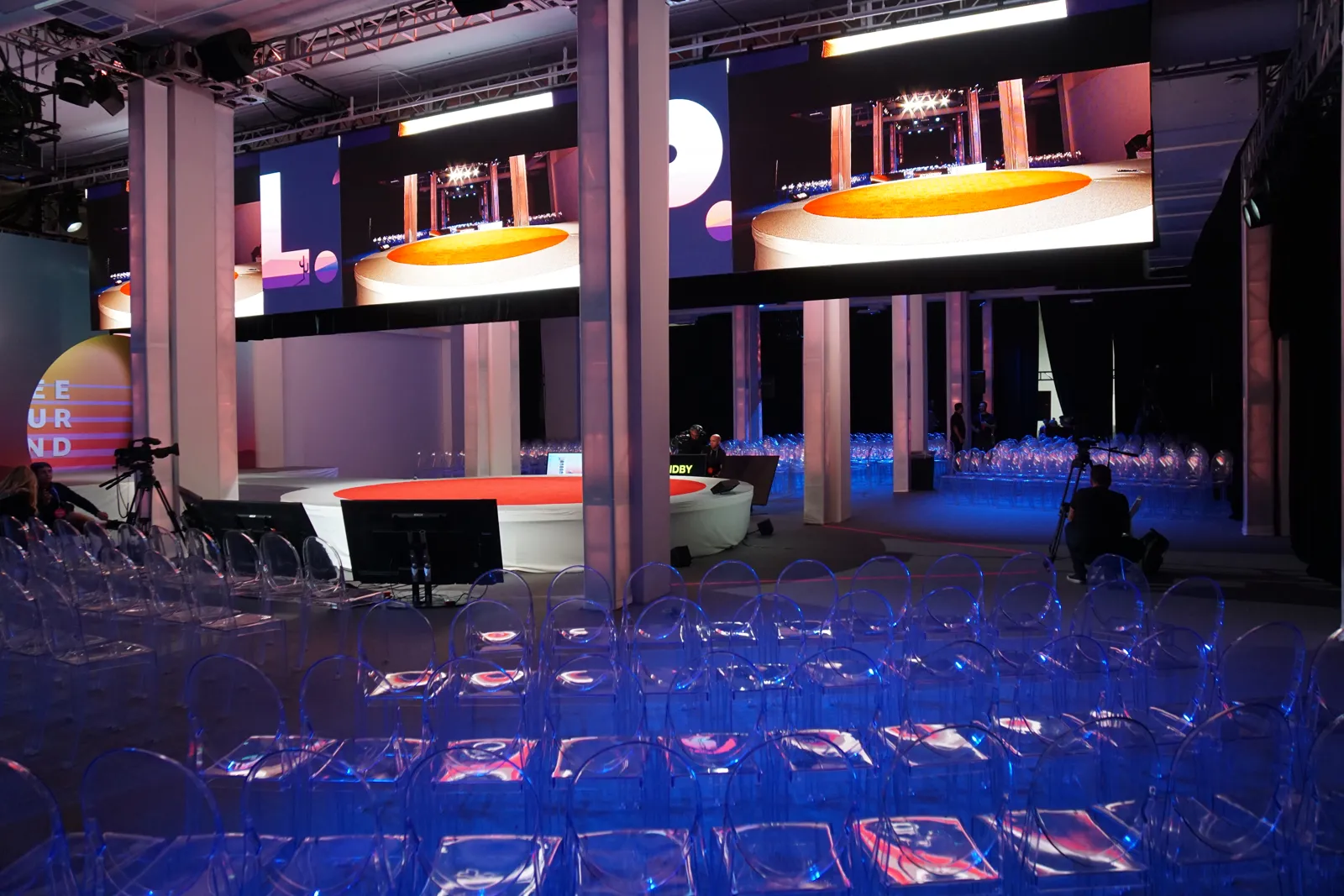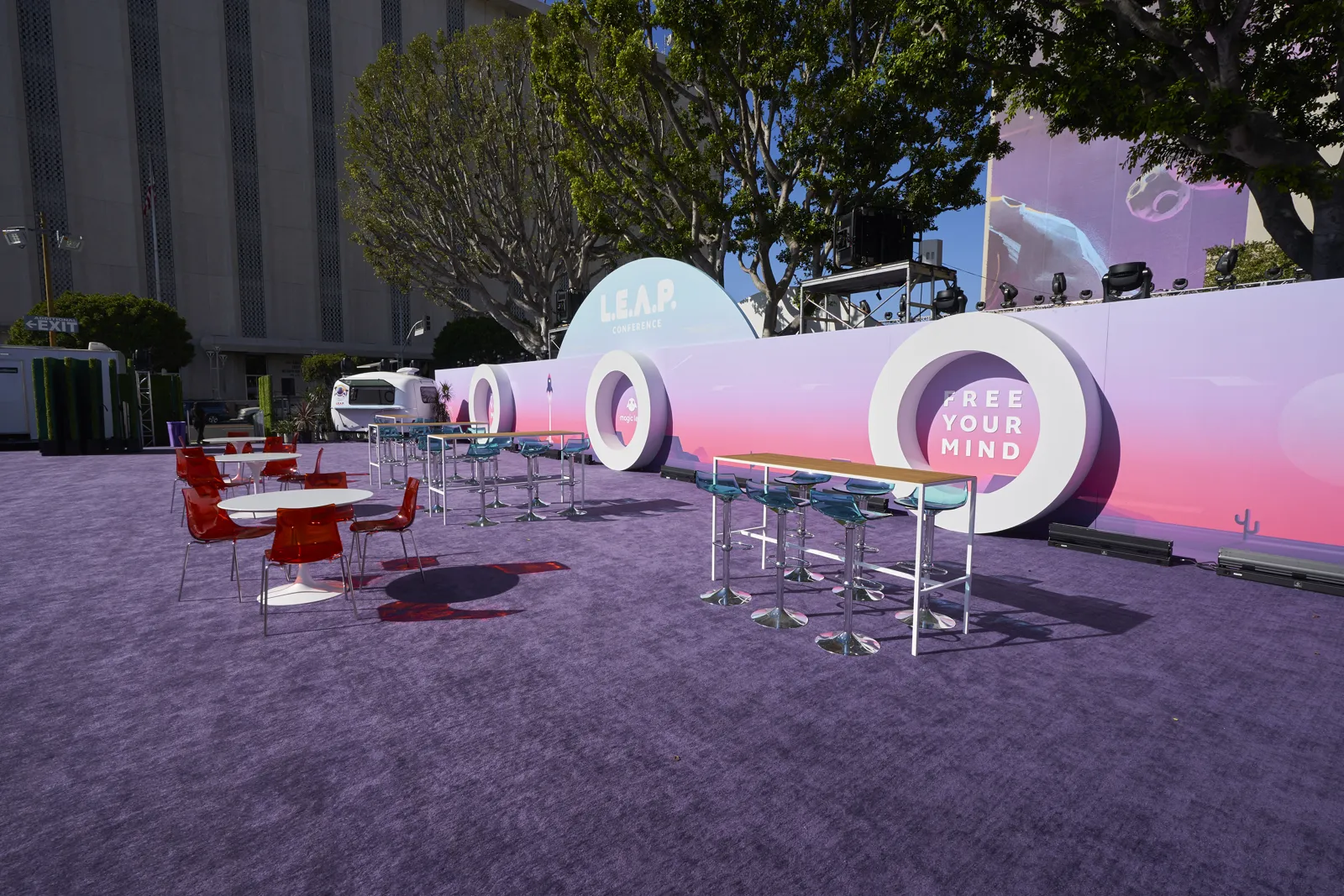
The band plugs in during the salads, the caterer starts the coffee urns and the uplights are already running. Then the room goes quiet as one breaker trips and takes the sound, the lights on the stage and the dessert station with it. Everyone looks at the venue.
Power failures at events are rarely bad luck. They usually come from loads nobody listed and circuits nobody mapped. This is general planning guidance, and a licensed electrician should confirm any plan that pushes your building's limits.
How Do You Calculate Power Requirements for an Event?
To calculate power requirements for an event, list every device that will draw power, note each one's wattage or amperage from the vendor's specs, group the loads by where they plug in and compare each group to the capacity of the circuit serving that location. Where the load exceeds what your circuits can safely carry, spread it across more circuits, bring in a power distribution setup or add a generator.
List Every Load
Start with the vendors who use the most power and ask for their requirements in writing. A band or production company usually lists power in its technical rider. Caterers, photo booths and decor teams often forget to mention it until they arrive.
- Sound systems, DJ setups and band backline
- Lighting, including uplights, stage lights and any LED wall
- Catering equipment such as coffee urns, warmers, heat lamps and induction burners
- Photo booths, displays, laptops and charging stations
- Heaters, fans or portable cooling for tents and patios
Ask for numbers in watts or amps per device and the total. If a vendor can only describe equipment by name, ask them to check the labels or manuals.
Understand Your Circuits
Most venues have far more outlets than circuits, and several outlets along a wall often share one breaker. You need to know which outlets sit on which circuit before you place a single cord.
Ask your electrician to label your panel and produce a simple circuit map of each room. It should show each outlet, the circuit it is on and that circuit's rating. Keep it with your floor plans.
The basic math is watts equals volts times amps. A standard 20-amp circuit at 120 volts can carry 2,400 watts in theory. Electricians commonly plan continuous loads, such as equipment running for hours, at no more than 80 percent of the breaker rating, which brings that circuit to about 1,920 watts for planning.
Map Loads to Circuits
With your load list and circuit map side by side, assign each load to a circuit and add up the totals. Keep a margin on each one.
Separate sound from lighting and catering where you can. Audio equipment can pick up hum when it shares circuits with dimmers or motors, and an audio engineer will usually ask for a clean, dedicated circuit near the stage.
Watch for loads that start at the same moment. Many devices draw more power briefly when switched on, so a full set of coffee urns turned on at once can trip a circuit that handles them fine once they are running.
A Worked Example for a Wedding
Consider a 150-guest wedding with a DJ, uplights and a coffee and dessert station along one wall. Say the DJ's rider asks for about 1,500 watts, the uplights total a few hundred watts and two coffee urns draw about 1,500 watts each.
The DJ goes on a dedicated circuit near the dance floor, and the uplights share a second circuit. The two urns cannot both run on one 20-amp circuit within the 80 percent planning limit, so each gets its own circuit, and neither shares with the DJ. That plan uses four circuits, and the circuit map tells you whether the wall where the client wants the coffee can provide them.
When You Need a Generator
A generator makes sense when the building cannot supply enough power where the event needs it, or when the event is outdoors with no service at all.
- Large concerts, production lighting or LED walls beyond your building's service
- Outdoor events, tents and patios far from building power
- Food trucks or vendors with heavy equipment and no hookups
- Events that need backup power for critical systems
Generator sizing, placement and connection belong to a qualified rental company and a licensed electrician. Generators must sit outdoors, away from doors, windows and air intakes because of carbon monoxide. Cable runs across walkways need covers or ramps, and your fire marshal or local permit office may need to approve the setup.
Build Power Into Your Booking Process
Add a power question to your event intake and your vendor rules. Ask every vendor to list their requirements two weeks before the event, check them against your circuit map and confirm the plan at the final walkthrough. Include a line in your vendor agreement that prohibits running extension cords from unapproved outlets.
For larger productions, consider adding a power distribution fee or requiring the production company to bring its own distribution with a licensed electrician on site.
The best power plan is the one nobody notices on the night.
Frequently Asked Questions
How much power does a DJ need at an event?
It varies with the equipment, but many DJ setups ask for one or two dedicated circuits near the booth. Ask the DJ for the total wattage of speakers, mixers and lighting and check it against your circuit capacity. Keep the DJ off circuits shared with catering or lighting dimmers.
How do you avoid tripping breakers at an event?
Get each vendor's power requirements in advance, map them to specific circuits and keep continuous loads within a safe margin of each breaker's rating. Spread heavy loads like coffee urns across separate circuits and avoid switching them all on at once. A licensed electrician can confirm the plan.
When does an event need a generator?
An event needs a generator when the building cannot supply enough power in the right place, when it takes place outdoors without service or when critical systems need backup. A rental company and electrician should size it based on the full load list. Permits may be required.
Can an outdoor event run on extension cords?
Small outdoor setups sometimes run on outdoor-rated cords from building outlets, provided the circuits can handle the load and cords are protected from water and foot traffic. Larger events usually need proper distribution or a generator. Check local codes and ask a licensed electrician before relying on cords.