A conference agenda shows a 15-minute break at 10. The coffee station has one line, 250 attendees and two urns. By the time the last person gets a cup, the next session has started with half the room in the hallway.
Conference catering succeeds or fails on timing and flow as much as on food. A standard schedule, built around the agenda and sized to the crowd, keeps attendees fed and sessions on time.
What Does a Conference Catering Schedule Include?
A conference catering schedule usually includes a continental or hot breakfast before the first session, a morning break with coffee and a snack, lunch at midday, an afternoon break with drinks and something sweet or savory and often an evening reception. Each service is timed to the agenda, sized to the expected attendance and set up so attendees can get through quickly.
Per-person pricing for each service belongs in your catering pricing. This schedule covers what to serve, when and how.
Breakfast Before the First Session
Open breakfast about an hour before the first session, when registration opens. Attendees arrive over that hour, so the line rarely peaks the way a break does.
A continental breakfast of pastries, fruit, yogurt and coffee suits most conferences. A hot breakfast with eggs and a protein suits longer days or events where attendees travel early. Not every registered attendee eats breakfast, so ask your caterer how they size it for conferences of your type.
Set coffee and tea at a separate station from the food. Breakfast lines move slowly when people wait behind someone pouring coffee.
The Morning Break
The morning break usually falls mid-morning, between the first and second session blocks. Plan 20 to 30 minutes if you can, since 15 minutes rarely gives a large group time to get coffee, use the restroom and return.
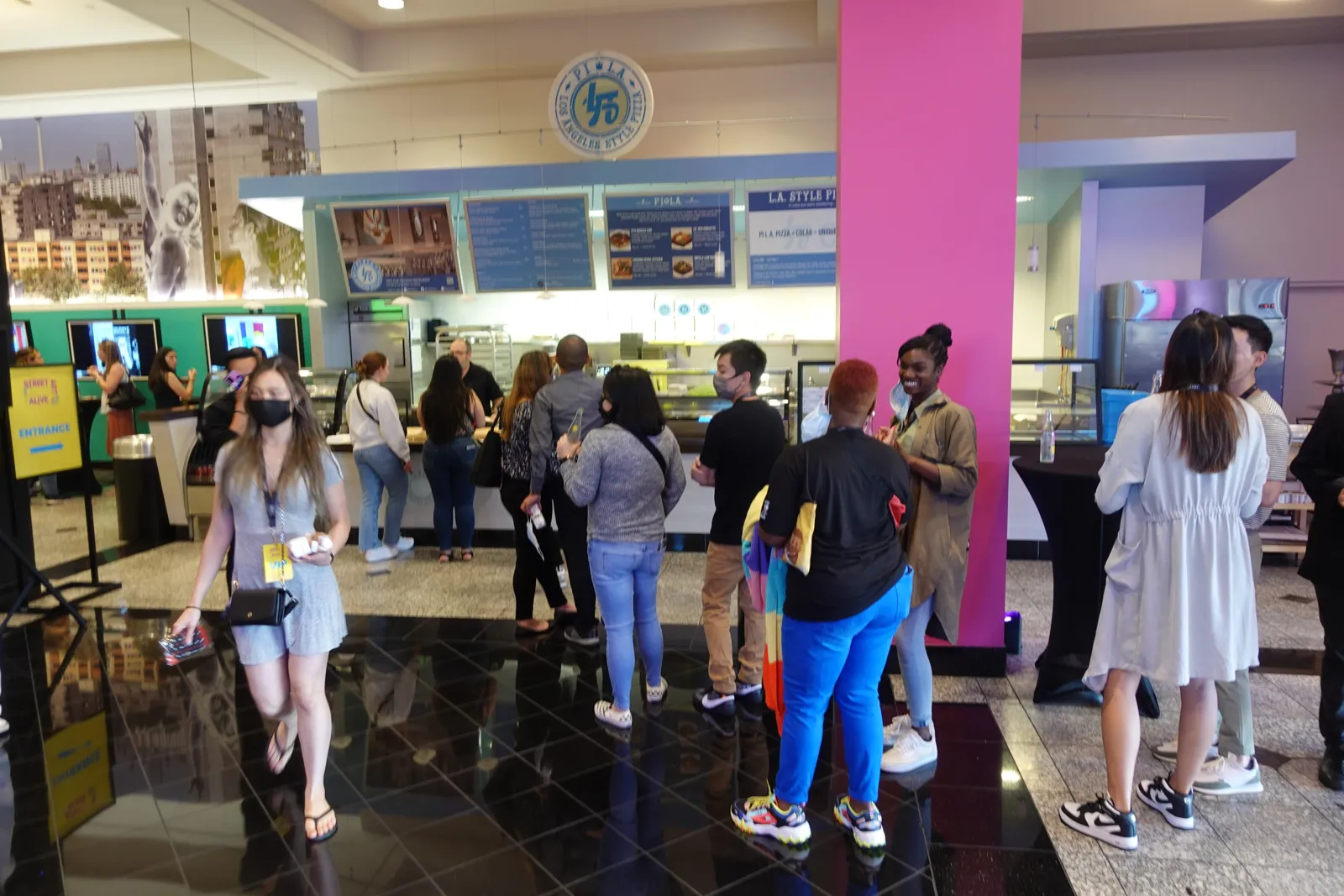
Refresh coffee and tea, add water and offer a light snack such as fruit, bars or pastries. Set multiple stations for larger groups, near the doors of the session rooms, so attendees spread out instead of forming one long line.
Lunch at Midday
Lunch usually runs 45 to 60 minutes. The service style decides how much of that time attendees spend eating instead of waiting.
- Buffet lunches with double-sided lines serve large groups quickly
- Boxed or grab-and-go lunches suit working sessions and tight agendas
- Plated lunches suit award lunches and VIP sessions with a speaker
- Stations work well for mixed crowds with many dietary needs
Ask the planner whether lunch is a break or part of the program. A keynote over lunch needs plated or pre-set service so the room is quiet when the speaker starts.
The Afternoon Break
Energy drops after lunch, and the afternoon break should help. Mid-afternoon, refresh coffee and add cold drinks, then offer something that feels like a treat, such as cookies, savory snacks or a themed station.
Many conferences save a little budget for this break, since it is the one attendees remember. Keep the same station layout as the morning so attendees know where to go.
The Evening Reception
A reception after the last session lets attendees network and sponsors host. It usually runs one to two hours with passed or stationed hors d'oeuvres and a bar.
Size the food to whether the reception replaces dinner. A short reception before attendees head out needs a few pieces per guest. A reception that is the evening meal needs much more, often with stations. Confirm the bar package and the cutoff time with the planner, and place bars apart from food stations.
Timing Breaks to the Agenda
Build the catering schedule from the agenda, then share it back with the planner so they can adjust. A few rules keep everything on time.
- Set break stations during the session before, quietly and with doors closed
- Have stations fully set five minutes before the break starts
- Refresh coffee just before each break begins
- Clear food stations once the next session starts, leaving water out
Put the schedule on the banquet event order with times, locations, guest counts and dietary notes, and walk through it with the kitchen and the event lead the day before.
A Sample Day for 200 Attendees
Consider a one-day conference for 200 attendees with three session blocks. Breakfast opens an hour before the first session with two food lines and two coffee stations. The morning break runs 25 minutes with three coffee and snack stations near the session room doors.
Lunch is a buffet with two double-sided lines and a separate dessert and coffee table. The afternoon break uses the same three stations with cold drinks added. A 90-minute reception closes the day with two bars and three food stations.
Adjust for your room layout, the planner's agenda and how many attendees actually stay for each part of the day. Save the schedule as a template for each conference space, and after every event note where lines formed and which services ran short.
When the breaks run on time, the whole conference does.
Frequently Asked Questions
How long should conference coffee breaks be?
Many planners schedule 20 to 30 minutes for a coffee break so attendees can get a drink, use the restroom and return on time. Fifteen minutes can work for small groups with several stations. Larger groups need longer breaks or more stations to avoid long lines.
How many coffee stations do you need for a conference?
It depends on attendance and the length of the break. Larger conferences usually set several stations near session room exits rather than one long table. Your caterer can size stations to your attendance, and coffee quantities depend on session length and time of day.
What should be served at a conference afternoon break?
Most afternoon breaks refresh coffee and tea and add cold drinks and water. Snacks often include something sweet, such as cookies, and something savory, such as nuts or chips. A themed station can make the break more memorable.
Should conference lunch be buffet or plated?
Buffets with double-sided lines feed large groups quickly and suit most conferences. Boxed lunches work for working sessions, and plated lunches suit events with a speaker during the meal. Choose based on the agenda and how much time lunch has.