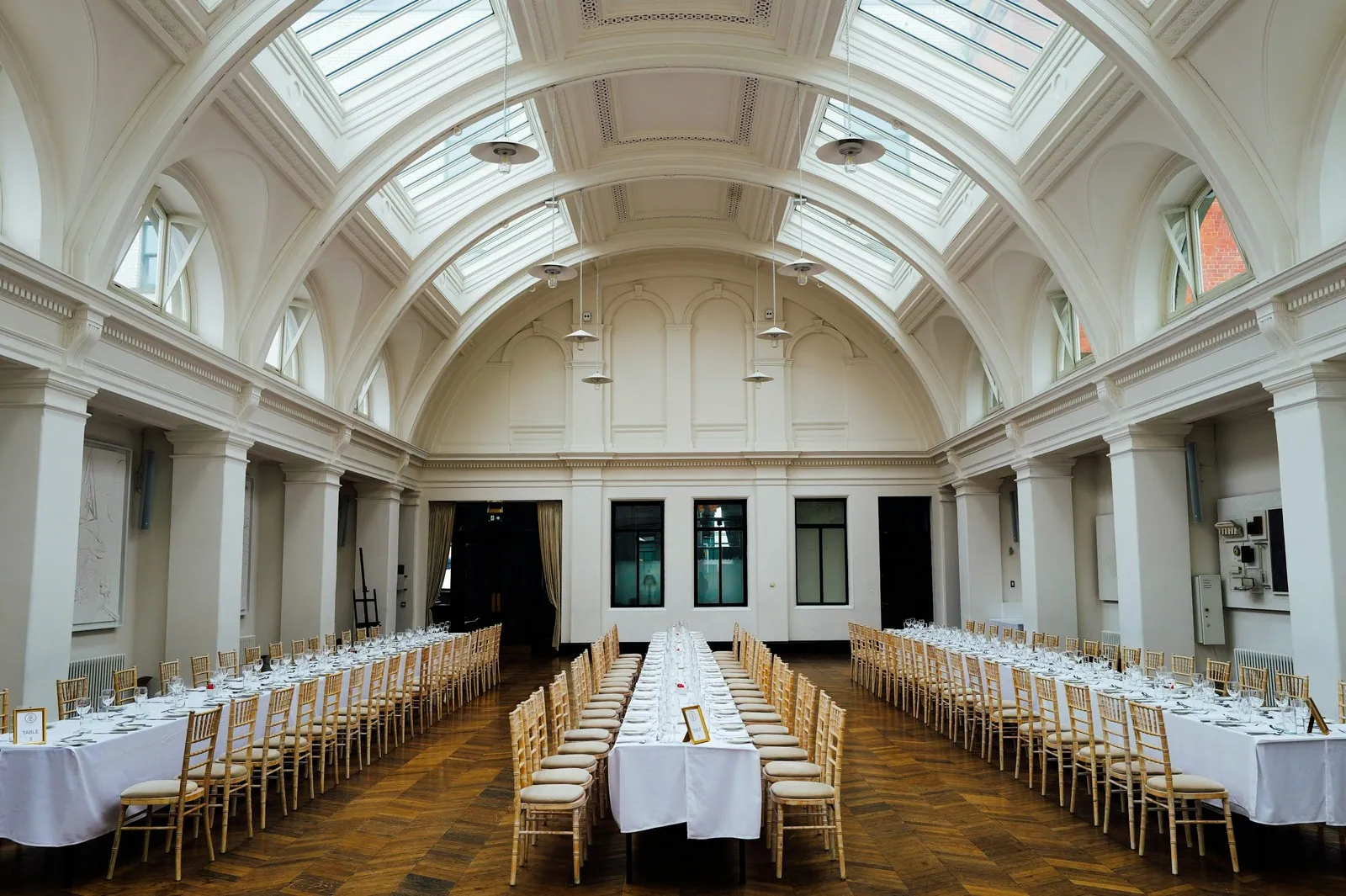

The air conditioning fails at 4 p.m. on the hottest Saturday of the year, two hours before 200 wedding guests arrive. The service company finds a clogged filter and a worn belt, both of which would have taken ten minutes to spot during a quiet Tuesday. The repair costs more on a weekend, and the review costs more than the repair.
Most event-day equipment failures come from things nobody checked during a quiet week. A preventive maintenance checklist turns those checks into a routine that fits around your calendar.
What Should a Venue Maintenance Checklist Include?
A venue maintenance checklist should include daily or per-event checks of restrooms, lighting, climate, exits and floors, monthly checks of safety equipment, filters, furniture and AV and annual service of building systems such as HVAC, fire alarms, sprinklers, kitchen hoods, electrical panels and the roof. Each task needs an owner, a log entry when done and a place on the calendar that avoids event days.
Seasonal items, such as winter freeze protection, belong on a separate seasonal list. This checklist covers the year-round routine.
Daily and Per-Event Checks
Run these checks before each event and again after it, with a quick note on anything that needs attention.
- Restrooms, for working fixtures, leaks, supplies and odors
- Lighting, for burned-out bulbs and working dimmers and controls
- Heating and cooling, set and holding the right temperature
- Exits, exit signs and emergency lights visible and unobstructed
- Floors, doors and locks, for damage, trip hazards and security
Kitchens add their own daily checks, such as refrigerator and freezer temperatures, which many health departments expect you to log.
Monthly Checks
Monthly tasks catch slow wear before it becomes a failure.
- Test emergency lights and exit signs and do a visual check of extinguishers
- Replace or inspect HVAC filters on your system's schedule
- Inspect chairs, tables, staging and dance floor panels for damage
- Test AV equipment, microphones, projectors and the sound system
- Check plumbing under sinks, around toilets and at the water heater
Fire and building codes commonly require regular testing of emergency lighting and inspection of extinguishers, so confirm the exact frequency with your fire marshal or service contractor and keep the records.
Quarterly and Seasonal Checks
Some tasks fit a quarterly rhythm or the change of seasons. Have HVAC serviced before the heating and cooling seasons begin. Clean gutters and roof drains, especially after storms and before winter. Check exterior lighting, parking surfaces and walkways for damage and trip hazards.
Pest control usually runs on a regular contract. Ask your provider to note activity in a log so you can see patterns.
Annual Service
Annual items usually need licensed contractors and a scheduled visit. Book them in your slowest months.
- Fire alarm, sprinkler and suppression system inspections
- Kitchen hood and exhaust cleaning, on a schedule set by cooking volume
- Electrical panel inspection and any thermal scan your insurer suggests
- Roof inspection and repairs
- Elevator inspection, where required, and backflow testing where local rules call for it
Floor refinishing, deep carpet cleaning and painting also fit an annual window, since they can take a room out of service for days.
How to Log Maintenance
A maintenance log protects you twice. It shows what was done, and it gives you evidence of reasonable care if an insurer, inspector or attorney asks.
Record the date, the task, who did it, what they found and what was fixed. Add photos for damage and repairs. Keep contractor reports and inspection certificates together, and note the date the next service is due. A shared spreadsheet or task list works well if everyone uses it.
Keep the log where every staff member can reach it, so the person who spots a problem on a Saturday night can record it before they forget. Review the log every quarter. Repeated issues, such as the same toilet leaking or the same breaker tripping, point to a deeper problem worth fixing properly.
Schedule It Around the Booking Calendar
Maintenance competes with events for time and space, and events usually win. Protect the work by putting it on the calendar first.
Block recurring maintenance windows on quiet weekdays, such as one morning a week for monthly tasks. Schedule annual contractor visits in your slow season and treat them like a booking. Before your busiest season, do a full pre-season walkthrough so problems are fixed before back-to-back events leave no time.
Never schedule contractors on event days unless the work is an emergency. A contractor's ladder in the lobby at 5 p.m. is a hazard and a poor first impression.
Start Your Checklist This Week
Write the daily, monthly and annual lists for your building, assign an owner to each and set the recurring maintenance windows on your calendar. Book any annual service that is overdue. Then walk the building with the daily list before your next event.
A building that is checked every week rarely surprises anyone on a Saturday.
Frequently Asked Questions
How often should a venue do maintenance checks?
Most venues run quick checks before and after every event, monthly checks of safety equipment, filters, furniture and AV and annual service of major building systems. The exact frequency for safety systems often comes from fire codes and manufacturer guidance. Keep a log of every check.
What maintenance is required by law for event venues?
Requirements vary by location, but they commonly include inspections of fire alarms, sprinklers, extinguishers, emergency lighting and elevators, plus health department rules for kitchens. Your fire marshal, health department and insurer can tell you what applies. Keep certificates and records on file.
How do you schedule maintenance at a busy venue?
Block recurring maintenance windows on quiet weekdays and book annual contractor work during your slow season. Treat each window like a booking so it is not given away. A pre-season walkthrough before your busiest months catches problems early.
Who should be responsible for venue maintenance?
Assign one person, such as a facilities manager or operations lead, to own the checklist and the log. Other staff can complete daily checks and report issues, but one owner makes sure tasks happen and contractors are booked. Larger venues may have a dedicated facilities team.