An esports tournament looks like a conference with screens until load-in starts. Then the organizer asks how many dedicated circuits the stage has, whether every player station can be wired to the network, where the broadcast team sets up and how the room will stay cool with dozens of gaming computers running for twelve hours.
Gaming events need far more power, network and technical planning than a typical meeting. Use the checklist below to qualify an esports or gaming inquiry before you quote, and to know which questions to put to your electrician and IT provider.
What Are the Venue Requirements for an Esports Event?
An esports event needs a reliable wired network with low latency for every competitor, enough dedicated power circuits for player stations, screens, lighting and broadcast equipment, a stage that shows players and the game to the audience, large displays and sound for spectators, a production area for streaming, and seating with clear sightlines. It also needs strong cooling, secure overnight storage for equipment and extra time for load-in and testing. The exact needs depend on the number of players, the audience size and whether the event is streamed.
Network
The network is the most critical requirement. Competitive play depends on a stable, low-latency connection, and a dropped connection can stop a match.
- Wired connections for every competitor station, since competitive play rarely relies on Wi-Fi
- Enough upstream bandwidth for the games, the broadcast stream and any online play
- Separate networks for competitors, production and the audience or public Wi-Fi
- A network engineer on site, with a plan for redundancy if the main connection fails
Ask the organizer for their network specification early. Many tournament organizers bring their own network equipment and need access to your building's internet service, cable routes and a place for their racks.
Power
Gaming events draw a lot of power. A gaming computer and monitor can draw several hundred watts under load, and stations run for hours at a time.
Consider a tournament with 40 player stations. If each station draws about 500 watts under load, the stations alone need about 20,000 watts, spread across many circuits. On a standard 15-amp, 120-volt circuit in the United States, electricians commonly plan continuous loads at no more than about 80 percent of the circuit's capacity, so each circuit can carry only two or so stations at that draw. Add stage lighting, LED walls, broadcast gear and concessions, and the total grows quickly.
Have a licensed electrician review the power plan for every esports event. They may recommend distribution panels, a generator or dedicated circuits run for the event. A breaker that trips in the middle of a match is a failure that careful power planning prevents.
Stage and Player Area
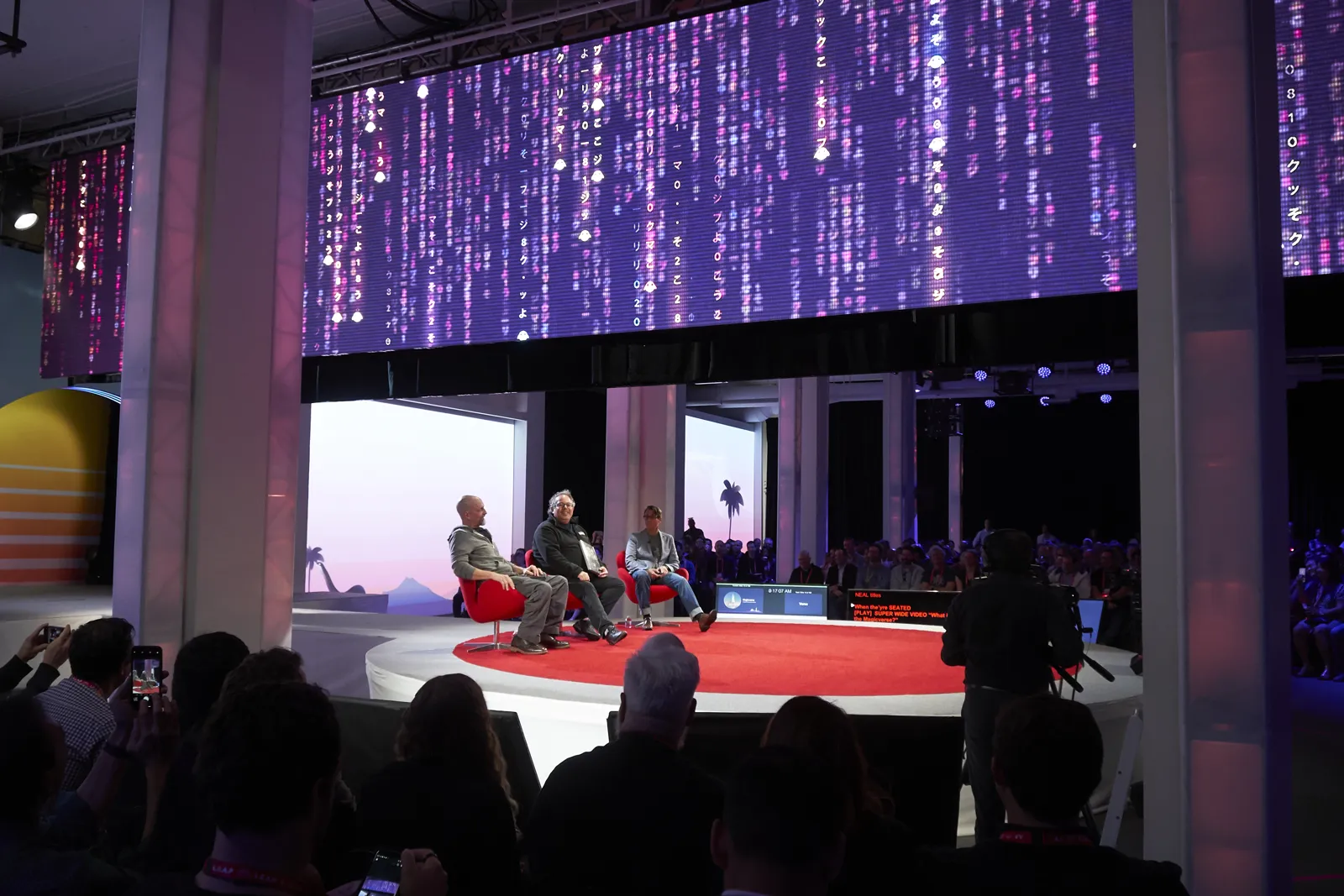
The stage shows the players and the competition to the audience.
- A raised stage large enough for both teams, their tables, chairs and equipment
- Player positions arranged so the audience and cameras can see faces and reactions
- A casters' or commentators' desk with its own microphones and sightlines to screens
- Clear, safe cable management across the stage
Players often need a separate warm-up or practice area and a quiet green room. Check whether the organizer needs soundproofing or headsets so competitors cannot hear the casters or the crowd.
Screens, Sound and Broadcast
Spectators need to see the game. Large screens or LED walls above or beside the stage show the main feed, with smaller screens or monitors in other areas for overflow audiences.
Most esports events are streamed. The production team needs a control area near the stage with power, network, sightlines and room for equipment, plus camera positions in the room and on stage. Audio needs mixing for the room and for the stream, so plan space for a sound desk as well.
Audience, Cooling and Security
Audience space depends on the event. A tournament with a small public crowd needs seating with good sightlines, while a large fan event needs space for concessions, merchandise and activations. Check capacities against your fire code limits.
Cooling matters more than at most events. Dozens of computers, stage lighting and a full room produce a lot of heat, and equipment and players both suffer in a warm room. Run HVAC early and plan for supplemental cooling if needed.
Multi-day tournaments leave expensive equipment in your building overnight. Provide secure storage or a lockable room, and confirm insurance coverage with the organizer.
Load-In, Testing and Timing
Esports events need longer setup than most meetings. Network and power testing, stage build, camera setup and game installation can take one or more full days before the event starts. Include load-in and testing days in the booking and price them accordingly.
Qualify the Event Before You Quote
Ask the organizer for the number of player stations, expected audience, streaming plans, their network and power specifications and the dates they need for load-in and testing. Compare the answers with your building's capacity and your electrician's advice before you commit.
Frequently Asked Questions
What internet speed do you need for an esports event?
It depends on the number of players, whether games run on local servers or online, and how many streams go out. Wired connections with low latency matter more than raw speed for competitors. Ask the organizer for their specification and have a network engineer confirm your service can support it.
How much power does an esports tournament need?
Each gaming station can draw several hundred watts under load, so power needs grow quickly with the number of stations, screens and lighting. A licensed electrician should review the full equipment list. Many events need temporary distribution or additional circuits.
Can any event venue host an esports event?
Many venues can host small gaming events with the right preparation. Larger tournaments need strong wired networking, substantial power, good cooling and space for production. Qualify each event against your building's capacity before agreeing.
How long does setup take for an esports event?
Setup often takes one or more full days for network, power, stage and broadcast equipment, plus time to test games and connections. Multi-day tournaments may need several days of load-in. Book those days with the event.